

The Ultimate Guide to Kids Martial Arts in El Dorado Hills: Everything You Need to Succeed
Choosing a martial arts school is about more than finding a place for your child to exercise. You want a positive environment where they can learn at their own pace, build useful skills, and feel supported as they grow. If you’re exploring kids martial arts in El Dorado Hills, this guide will help you understand what classes may include, what to look for in a school, and how to take a comfortable first step.
At West Coast World Martial Arts, children train in a family-oriented school that welcomes students ages 3 and up. The goal is steady progress: learning techniques while practicing respect, discipline, teamwork, and confidence.
What do kids learn in martial arts?
Martial arts training combines movement and technique with habits that help children learn and work with others. Depending on their age and experience, students may practice basic strikes, kicks, blocks, footwork, balance, and self-defense skills. They also learn to listen, follow directions, take turns, and keep trying when something feels unfamiliar.
These lessons develop gradually. A child might first learn to stand in a balanced position, then practice a movement slowly, and later combine it with another technique. Small improvements (remembering a sequence, staying focused for a little longer, or encouraging a classmate) are meaningful signs of progress.
Research reviews suggest that children’s martial arts participation can support physical fitness and motor skills, though outcomes depend on the program and the quality of instruction. Benefits like confidence and focus are not automatic; a respectful, age-appropriate teaching environment matters. (Systematic review of martial arts participation in children)
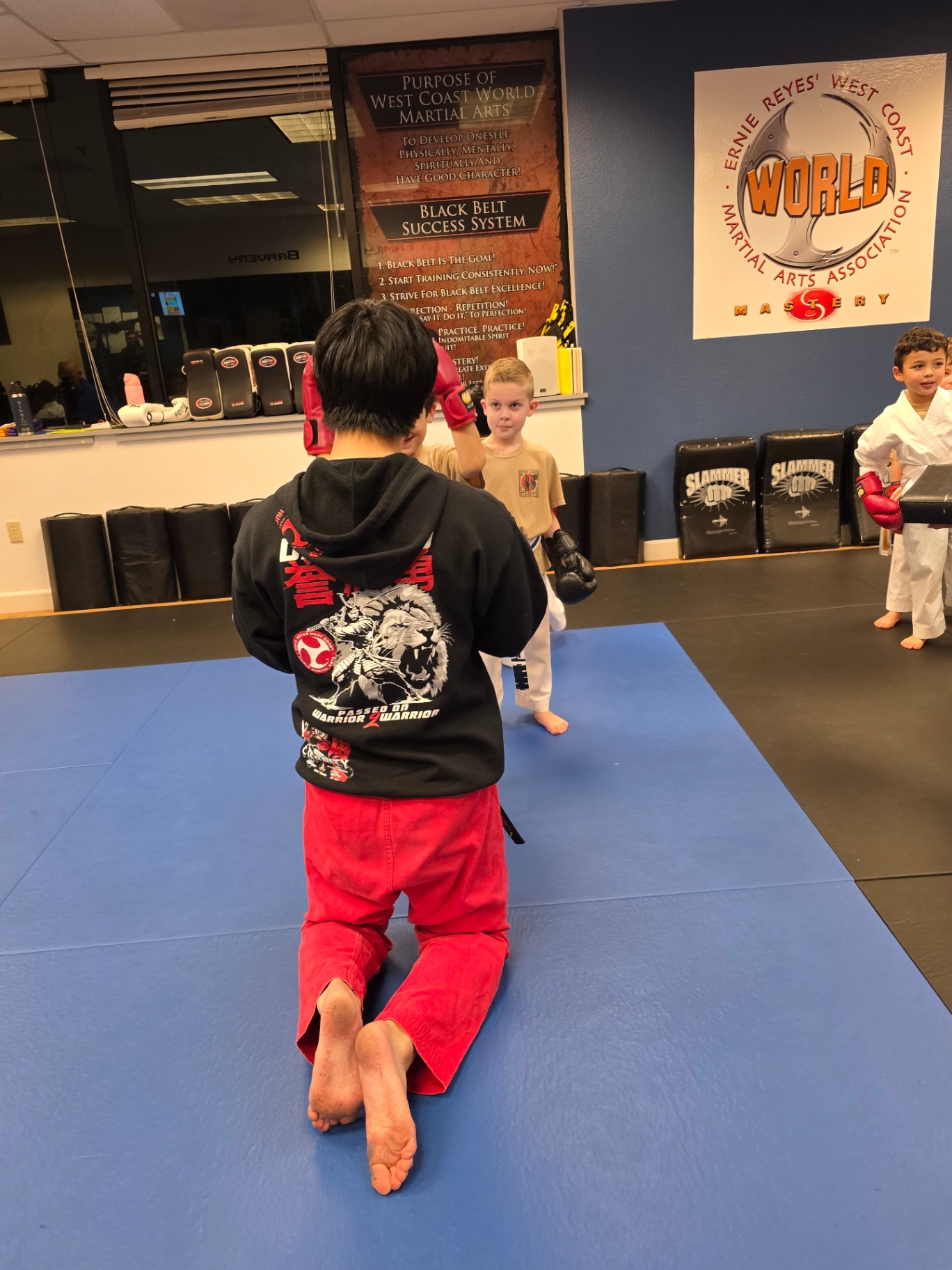
Programs should fit your child’s age and stage
Children develop at different rates. A good program makes room for those differences instead of expecting every student to learn in the same way or at the same speed.
At West Coast World Martial Arts, the school’s program pages describe:
Lil Dragons: Designed for younger children, with a focus on respect, discipline, focus, balance, and fun. The program is listed for ages 3–6 on the Lil Dragons page.
Juniors and youth: Classes for school-age children introduce more combinations and build on skills such as focus, respect, and confidence. See the Juniors program and the school’s FAQ for current program information.
Teens: Older students can continue developing technique, fitness, and self-defense skills in an age-appropriate setting. Explore the teen and adult program.
Age ranges and class availability can change, so contact the school to confirm the best fit for your child.
What does a class look like?
A structured class gives children a clear rhythm and plenty of chances to practice. Class formats vary, but a well-organized session may include a warm-up, foundational movement, instructor demonstrations, guided drills, and a short review. Partner activities, when included, should be supervised and matched to students’ readiness.
Instructors can also adapt how they teach. A child who is new to group activities may need a simple, repeated instruction. Another student may be ready for a more challenging variation. At West Coast World Martial Arts, instructors tailor the curriculum to each student’s needs, so children can work on the basics and progress when they’re ready.
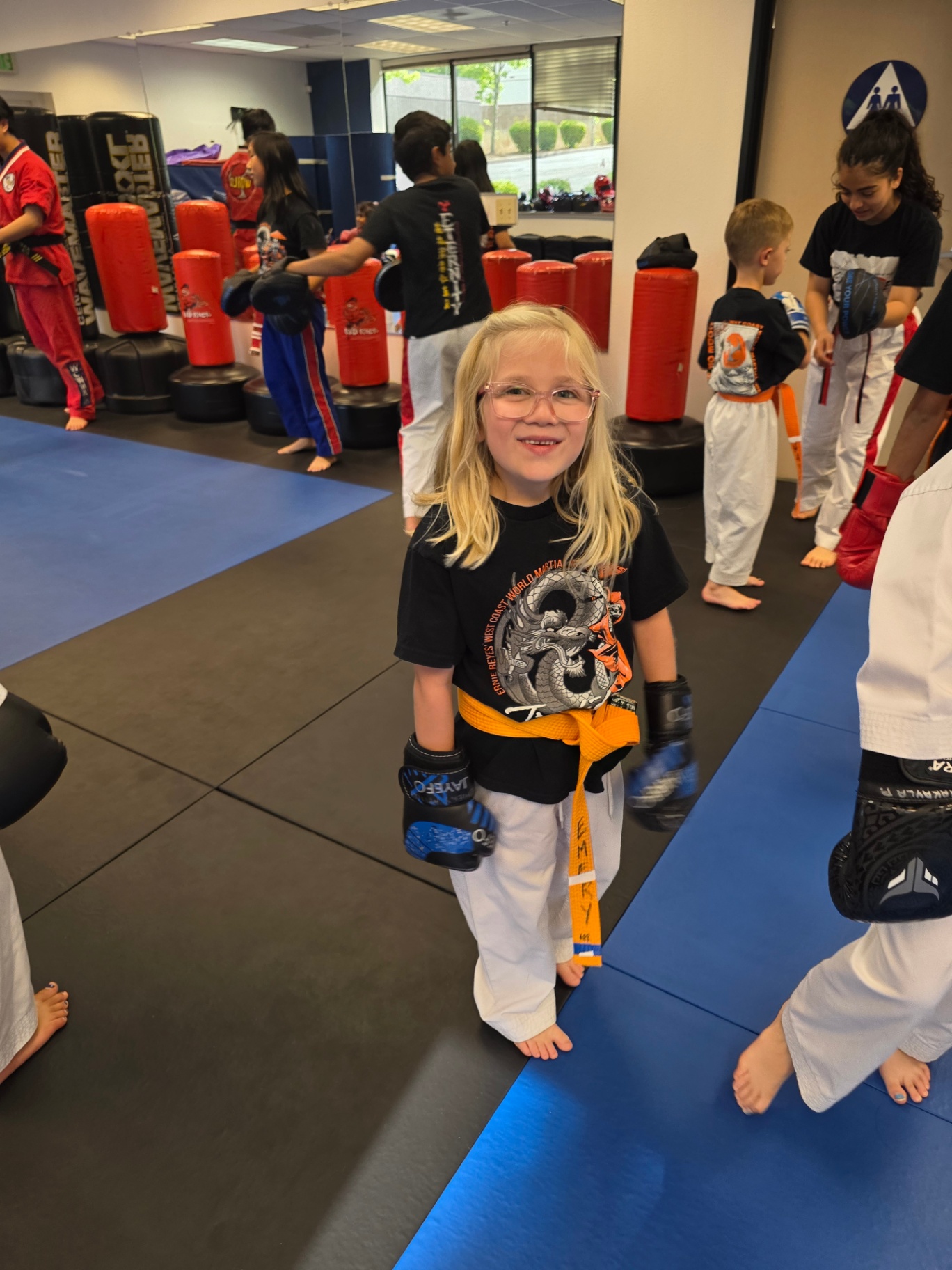
Confidence, respect, and teamwork grow through practice
Confidence is not something a child has to arrive with. It can grow as they learn a new skill, make a mistake, try again, and discover they can improve. Martial arts also gives students opportunities to practice respecting instructors and classmates, sharing space, and being a reliable partner.
Self-defense education should emphasize awareness, boundaries, and seeking help, not picking fights. No martial arts program can guarantee that a child will avoid harm or manage every difficult situation. Parents can ask how a school teaches safety, de-escalation, and age-appropriate self-defense alongside physical skills.
A supportive class celebrates effort as well as achievement. If your child has a shy day, struggles with a technique, or needs a little more time, that’s part of learning. Encourage them to focus on one small goal at a time.
How do belts and progress work?
Many martial arts programs use belts or other levels to mark progress. At West Coast World Martial Arts, the school’s FAQ describes a structured belt system with curriculum requirements and an emphasis on mastering fundamentals before advancing.
A belt is best understood as a milestone, not a measure of a child’s worth or a race against classmates. Progress and testing schedules vary by school, so ask how students are assessed and what skills are expected at each level.
Useful questions for parents:
What techniques and class habits are expected before a student advances?
How do instructors decide when a child is ready to test?
What happens if a student needs more practice?
Are testing dates and any related fees explained in advance?
A clear, skill-based approach helps children understand what they’re working toward. It also reassures them that it’s okay to take the time they need.
Safety comes first
Martial arts should challenge children while keeping training appropriate to their age, size, experience, and readiness. Before enrolling, visit a class or ask what a trial session involves. Notice whether the instructor explains activities clearly, supervises students closely, and responds respectfully when a child needs help.
Ask the school how it handles partner drills, contact, protective equipment, injuries, and parent communication. The American Academy of Pediatrics notes that injury risk varies across martial arts activities and that contact and sparring deserve particular consideration. (AAP guidance on youth participation and injury risk)
Parents should feel comfortable asking questions and observing the environment. A good fit includes a child who feels encouraged, not pressured, and instructors who welcome a conversation about individual needs.

How to choose the right school
When comparing kids martial arts in El Dorado Hills, look beyond the style name or a promise of fast results. Consider the day-to-day experience your child will have.
Use this checklist:
Watch a class: Is instruction organized, positive, and easy for children to follow?
Ask about age groups: Are activities and expectations appropriate for your child’s stage?
Look for individual guidance: Do instructors offer support when students need extra practice or a different explanation?
Clarify progression: Are curriculum goals and testing expectations explained?
Ask about safety: How are contact, supervision, and injuries handled?
Check the atmosphere: Do students show respect for one another? Does your child feel welcome?
Consider convenience: Can your family realistically attend consistently?
The right school is one where your child can participate safely, enjoy the learning process, and build skills over time. Your child’s comfort matters; give them space to ask questions and share what they thought after a visit.
Getting started: try a class
You don’t need prior experience, special athletic ability, or a perfectly confident child to begin. Start with a visit, ask your questions, and let your child experience a class in a supportive setting.
West Coast World Martial Arts offers a 30-minute trial class matched to your child’s age, with no pressure or commitment. To request one, visit the trial class page. The school is located at 5007 Windplay Drive, Suite 2, El Dorado Hills, CA, and can be reached at 916-933-1973.
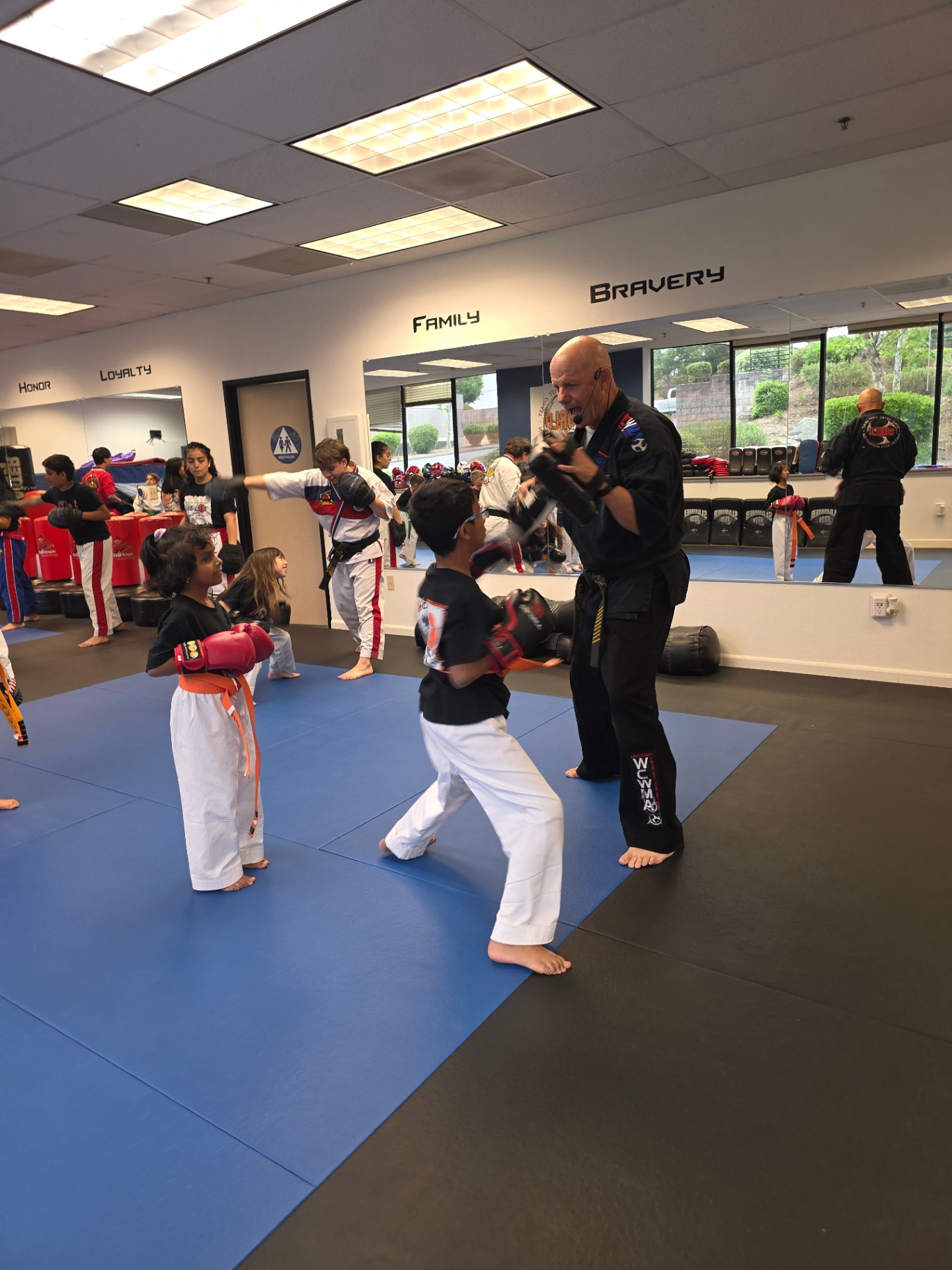
A strong start doesn’t require mastering anything on day one. It begins with showing up, learning the basics, and returning to practice. With patient instruction and steady encouragement, your child can build skills one class at a time, and find a community that supports their growth.
Comments