

Why Verbal Self-Defense Will Change the Way Your Child Handles Bullies
When your child is teased or targeted, it’s natural to want to help them feel safe and ready to respond. Self-defense can bring to mind physical techniques, but a child’s first tool is often their voice: a clear boundary, a calm response, and a plan to move toward safety.
Verbal self-defense doesn’t mean winning an argument or making a bully stop every time. It means helping your child recognize what’s happening, speak up when it’s safe, leave when needed, and tell a trusted adult. These are practical skills your child can rehearse and build over time.
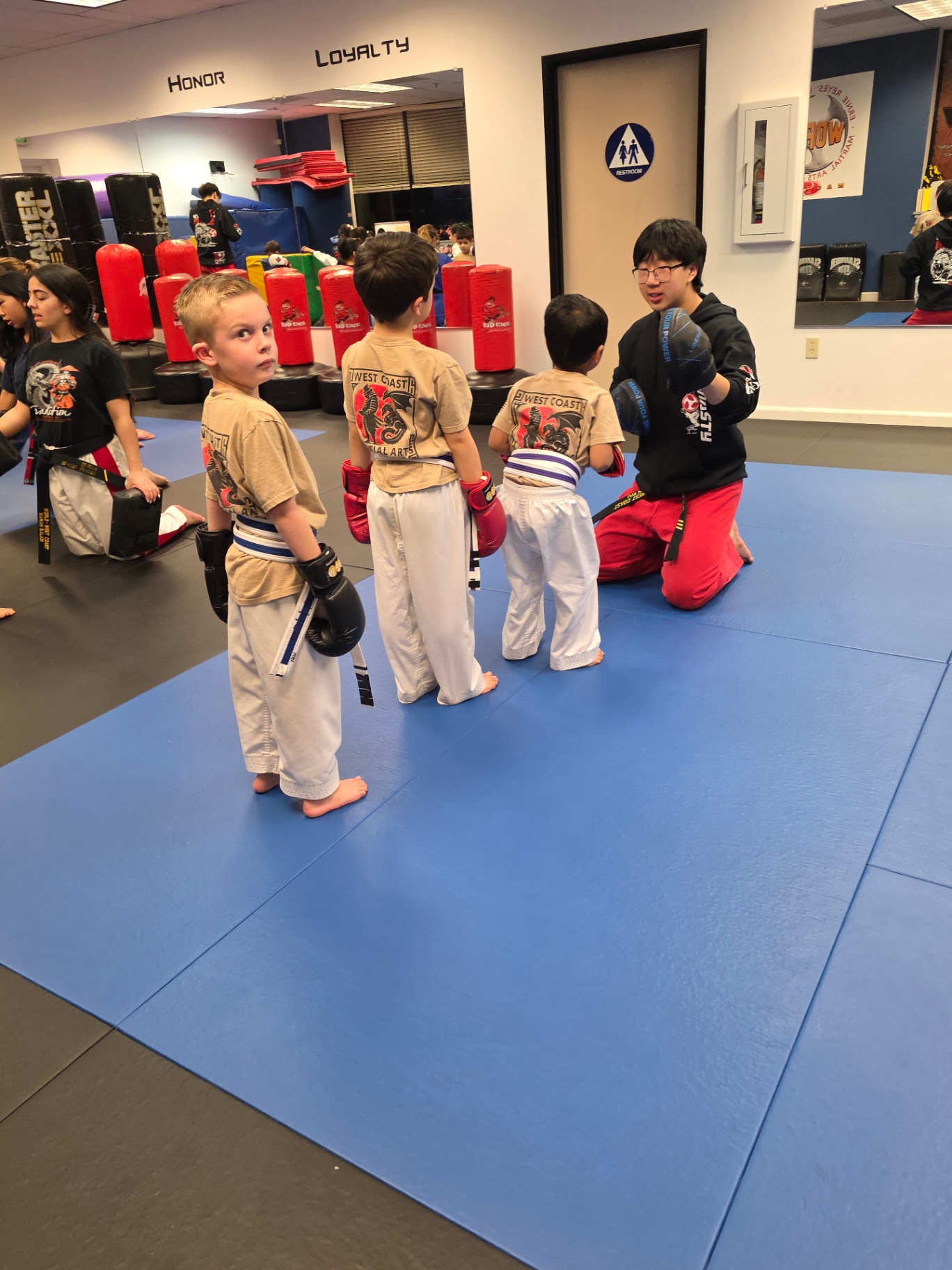
At West Coast World Martial Arts in El Dorado Hills, our bully-proofing approach includes communication and awareness alongside physical training. The goal is not to encourage confrontation. It’s to help children develop martial arts confidence. The ability to make thoughtful choices and seek help when they need it.
Why a child’s first defense can be verbal
Bullying can leave a child feeling unsure about what to say or do. A simple response practiced ahead of time can give them a starting point. For example: “Stop. That’s not okay.” Then, if the situation continues, they can walk away and find an adult.
A short, clear boundary may help a child avoid getting pulled into an argument. But speaking up is only one option. If your child feels unsafe, is outnumbered, or faces a threat, they do not have to confront the other child. Their safety comes first.
The guidance from StopBullying.gov also emphasizes choosing a safe response, walking away when needed, and getting help from an adult. A boundary is a useful tool, not a guarantee, and never a requirement in a dangerous situation.
What verbal self-defense teaches
Verbal self-defense is more than memorizing one phrase. It combines awareness, communication, and decision-making. With practice, your child can learn to:
Notice when an interaction feels uncomfortable or unsafe.
Use a clear voice and direct words to set a boundary.
Say “no” without feeling obligated to explain or apologize.
Disengage instead of trading insults or threats.
Recognize when to involve a trusted adult.
These skills support confidence without teaching aggression. Your child can be assertive, clear and respectful about their needs, without trying to intimidate someone else.
A simple, practical response to practice
Children respond differently under pressure. Some speak quickly; others freeze, feel embarrassed, or need time to process what happened. Rehearsing a few options in a calm moment can make those options easier to remember. Keep practice short and supportive.
1. Check for safety first
Ask your child to notice what is happening around them. Is there an adult nearby? Can they move toward a busier or safer place? Is someone threatening to hurt them or blocking their way?
If the situation feels dangerous, they should move toward safety and get help rather than trying to deliver the perfect response. Speaking up is not the only brave choice.
2. Use a steady voice and comfortable body language
When it feels safe, encourage your child to stand in a balanced, comfortable position and speak clearly. A firm voice does not need to be loud or angry. A brief look toward the other person may feel natural for some children, but eye contact is not required if it feels uncomfortable or unsafe.
Try practicing these phrases at home:
“Stop. That’s not okay.”
“I don’t like that. Give me space.”
“No.”
“I’m leaving now.”
The goal is a clear message, not a dramatic performance. Your child can choose the words that feel natural to them.
3. Set a boundary, then avoid the back-and-forth
A boundary works best when it is short and direct. Encourage your child not to insult, threaten, or argue in an effort to get the last word. They don’t need to convince the other person that their feelings are valid.
For instance, after saying, “Stop. That’s not okay,” your child can turn toward a safer area and leave. If the other child follows, continues, or makes threats, the next step is to find an adult.
4. Walk away and tell someone
Walking away is not weakness. It can be a smart way to avoid escalation and reach support. Help your child name several adults they can approach, such as a parent or caregiver, teacher, school counselor, coach, or another trusted adult.
Remind them that telling someone is not “getting someone in trouble” for no reason. It’s asking for help with a situation that affects their safety or well-being. StopBullying.gov’s guidance on talking about bullying encourages adults to listen, take the concern seriously, and work with the child on next steps.

Help your child recognize when to get adult help
A child can try a brief verbal boundary when they feel safe, but adults should step in when the behavior is repeated or threatening, involves physical contact, or causes the child to fear going to school or activities. Your child should also tell an adult if the other person ignores their boundary or follows them after they try to leave.
If the incident happens online, encourage your child not to trade insults or threats. They can show you the messages, save relevant evidence, and use the platform’s reporting and blocking tools with your support.
When your child tells you something happened, start by listening. You might say, “I’m glad you told me,” or “You deserve to feel safe. Let’s work out what to do next.” Ask what happened and what support they need. Avoid suggesting that your child caused the behavior or should simply fight back.
Practice without pressure
Role-play can help your child find words before a stressful moment, as long as it stays gentle and age-appropriate. Take turns practicing one short scenario at a time:
You describe a simple situation, such as someone making an unkind comment.
Your child chooses whether to speak, leave, or go directly to an adult.
Practice their chosen response once or twice.
Praise the decision-making, not just the volume of their voice.
You can ask, “What would help you feel safe right now?” rather than insisting that they use one specific phrase. Some children may need a quieter voice, more time, or a different way of communicating. Keep adapting the practice to your child.

Where physical self-defense fits
Martial arts self-defense is not about teaching children to start fights or retaliate. Verbal boundaries, leaving, and seeking help should be the first considerations whenever they are safe and appropriate. If a child faces immediate physical danger and cannot get away, they may need to protect themselves long enough to escape and reach an adult. That is a last resort, not a substitute for adult support.
Good instruction reinforces control, respect, and safety alongside technique. Children should learn that physical skills carry responsibility, and that avoiding a fight is often the best outcome.
Build confidence one small step at a time
Confidence does not mean your child will never feel nervous. It means they can practice making choices, speak up when it feels safe, and ask for help without shame. Small steps count: remembering a phrase, leaving an uncomfortable situation, or telling a trusted adult what happened.
At West Coast World Martial Arts, our family-oriented school serves children ages 3 and up in El Dorado Hills. Our bully-proofing curriculum helps students practice respect, awareness, boundaries, and age-appropriate self-defense in a supportive setting. Learn more about West Coast World Martial Arts or read more about martial arts self-defense in El Dorado Hills.
You can start at home today: choose one boundary phrase, practice it together, and identify an adult your child can go to for help. With patient support and consistent practice, your child can build the confidence to respond thoughtfully, and remember they never have to handle bullying alone.
Comments