

How Martial Arts Builds Confidence in Children
If you’re a parent in El Dorado Hills, you’ve probably seen it: that moment your child shrinks back when faced with a new challenge. Maybe it’s a difficult math problem, a new social group, or the prospect of standing up for themselves on the playground. We all want our kids to walk through the world with their heads held high, but confidence isn't something you can just "give" to a child. It has to be earned through experience.
At West Coast World Martial Arts, we see transformations every day. We see the "quiet kid" find their voice and the "energetic kid" find their focus. But how does kicking and punching actually lead to a more confident child? It’s not about teaching them how to fight; it’s about teaching them that they are capable of overcoming obstacles.
In this guide, we’re going to break down the science and the heart behind how martial arts builds real-world confidence that lasts a lifetime.
The Power of Tangible Progress: The Belt System
One of the biggest hurdles to building confidence is the feeling of being overwhelmed by a huge goal. For a seven-year-old, the idea of being "brave" is abstract. However, the idea of earning a yellow belt is concrete.
The martial arts belt system is a masterclass in goal achievement. It provides a clear, structured framework where children work toward measurable milestones. Each belt represents a series of small wins. When your child masters a new block or a specific kick, they receive immediate feedback and, eventually, a new stripe or belt.
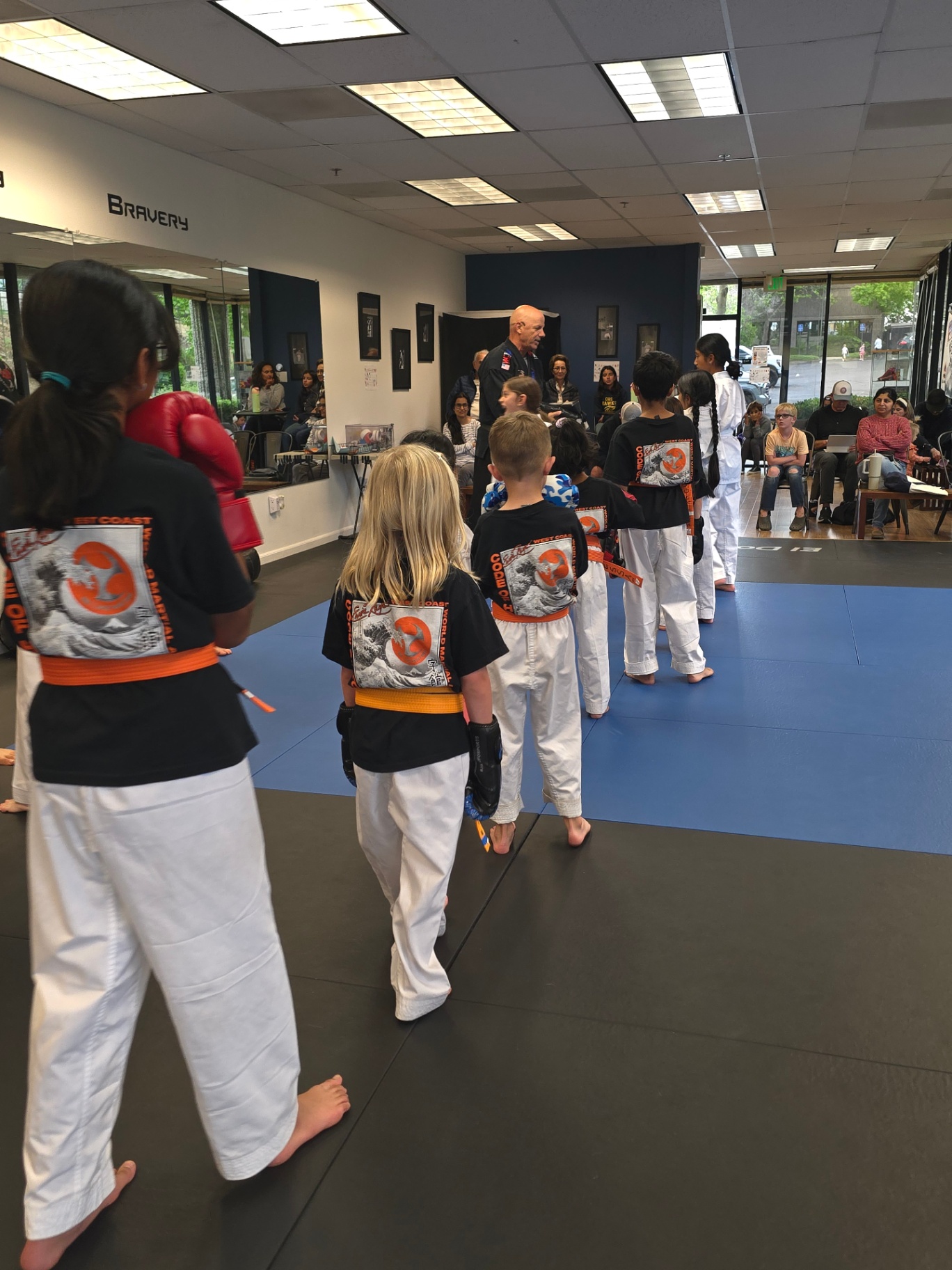
This constant loop of effort, achievement, and recognition reinforces a vital life lesson: hard work leads to success. This isn't just participation-trophy confidence; this is earned confidence. When a student stands in line with their peers, wearing a belt they worked months to earn, they know they deserve to be there.
Actionable Tip: Celebrate the Small Wins at Home
To support this journey, try to mirror this reinforcement at home. Don't just wait for the big belt graduation. When you notice your child practicing a stance in the living room or showing discipline by putting their gear away, acknowledge it. This reinforces the idea that the process of working hard is just as valuable as the reward.
For more on the foundations of this journey, check out our guide on starting your martial arts training basics.
Physical Mastery and Self-Efficacy
There is a direct link between how a child moves and how they feel about themselves. Martial arts training involves complex movements: cross-lateral patterns, balance drills, and high-intensity strikes: that demand total body awareness.
As children develop physical fitness and new skills, they gain what psychologists call "self-efficacy." This is the belief in one’s own ability to execute tasks and reach goals. When a child realizes they can control their body to perform a spinning back kick or a precise kata, that sense of capability leaks into other areas of their life.
Many parents worry that teaching kids these skills might make them more aggressive. In reality, the opposite is true. When a child knows they can defend themselves, they no longer feel the need to prove it through aggression. You can read more about this in our article: Can kids martial arts build confidence without making them aggressive?.

Emotional Regulation: Finding Calm in the Chaos
Confidence isn't just about being bold; it’s about being steady. Martial arts emphasizes emotional discipline. In our classes at West Coast World Martial Arts, we create a "controlled adversity" environment. This means we challenge the kids: maybe through a tough fitness drill or a focused sparring session: to stay calm and focused while they are tired or frustrated.
Learning to govern behavior and emotions under pressure is foundational to self-worth. If a child knows they can keep their cool when they miss a target in the dojo, they are much more likely to stay calm when they face a difficult test at school or a disagreement with a friend.

The Science of Focus
This emotional mastery is closely tied to attention. Research shows that the structured environment of a dojo helps kids improve their "executive function": the mental skills that include working memory, flexible thinking, and self-control. For a deeper dive into the "why" behind this, take a look at the science behind focus and how martial arts improves attention in kids.
Social Confidence and the End of Shyness
For many children, the greatest source of anxiety is social interaction. Martial arts provides a unique social laboratory. Unlike a standard classroom where kids are mostly stationary, the dojo is a place of movement and interaction.
Through partner drills and teamwork exercises, children learn to:
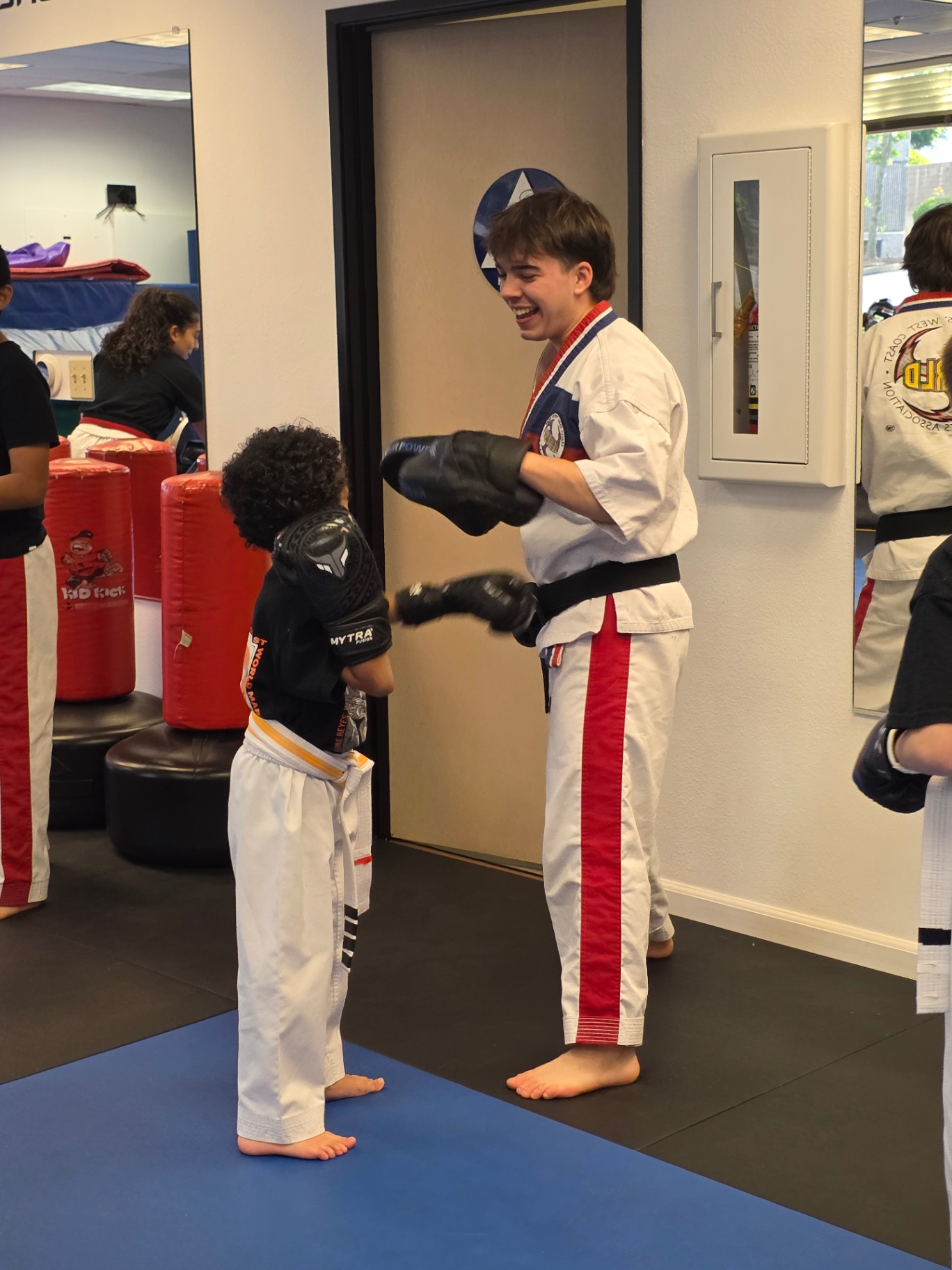
Communicate effectively: Asking a partner to hold a pad higher or lower.
Collaborate: Working together to master a sequence of moves.
Show Respect: Bowing to their instructor and their peers, which builds empathy.
We often see students who started as incredibly shy eventually leading the warm-up for the younger kids. This gradual exposure to "public speaking" (in the form of leading a class or performing a form) builds a layer of social armor.
Our local community in El Dorado Hills has seen firsthand how these skills translate to better classroom behavior and stronger friendships. You can see some of those stories here: How martial arts is shaping lives locally.
Individual Growth vs. Team Sports
In many team sports, a child’s confidence can be fragile. If they miss the winning goal or get "benched," their self-esteem takes a hit. They might feel like they are "letting the team down."
Martial arts is different. While we train in a community environment, the progress is entirely individual. No one is ever "benched" in martial arts. Your child isn't competing against the kid next to them; they are competing against who they were yesterday. This shift in focus: from external competition to internal growth: allows children to progress at their own pace without the fear of failure.
Actionable Tip: Focus on Effort Over Outcome
When your child finishes a class, instead of asking "Did you do better than the other kids?" try asking "What was the hardest thing you did today, and how did you get through it?" This shifts their focus toward their own resilience and away from comparison.
Real-World Transfer: From the Mat to the Classroom
The ultimate goal of West Coast World Martial Arts isn't to create world-class fighters: it’s to create world-class people. The confidence built on our mats doesn't stay in the dojo.
We hear from parents all the time that after a few months of training, their children are:
More willing to try new things: Because they’ve learned that "being a beginner" isn't scary.
More resilient: When they fail a test or lose a game, they don't crumble. They look for the lesson and try again.
Better at handling peer pressure: A confident child is much less likely to follow the crowd if the crowd is doing something wrong.
Ready to Start the Journey?
Building confidence is a marathon, not a sprint. It takes consistency, a supportive environment, and the right guidance. If you’re looking for a way to give your child the tools they need to succeed in El Dorado Hills and beyond, we’d love to have you join our family.
At West Coast World Martial Arts, we pride ourselves on being a character-first school. We focus on the person inside the uniform just as much as the skills they are learning.
Take the first step today:
Visit our About Us page to learn more about our philosophy.
Check out our homepage to see our current class schedules.
Come by for a visit and see a class in action!
Your child's journey toward unstoppable confidence starts with a single bow. Let's get started together.
Comments