

Screen Time vs. Mat Time: Why El Dorado Hills Parents Are Ditching Devices for Martial Arts Training
If you've ever had to pry a tablet from your child's hands or negotiate screen time like it's a hostage situation, you're not alone. Parents across El Dorado Hills are facing the same daily battles: and many are finding an unexpected solution on the martial arts mat.
The shift from screens to martial arts training isn't just a trend. It's a conscious choice by families who want something more for their kids than another hour of scrolling, gaming, or passive entertainment. And the results? They're speaking for themselves.
The Screen Time Reality Check
Let's be honest: screens aren't going anywhere. They're woven into our daily lives, from school assignments to staying connected with friends. But here's where the concern kicks in.
The average child spends anywhere from four to seven hours per day on screens outside of schoolwork. That's nearly a part-time job's worth of passive consumption. And while some screen time can be educational or social, the side effects of too much are becoming impossible to ignore:
Decreased physical activity and rising childhood obesity rates
Shorter attention spans and difficulty focusing in school
Increased anxiety and mood swings, especially in teens
Reduced face-to-face social skills and real-world communication
Poor sleep quality from blue light exposure and overstimulation
If any of these sound familiar, you're not failing as a parent. You're simply navigating a challenge that didn't exist a generation ago. The good news? There's a powerful antidote: and it's been around for centuries.
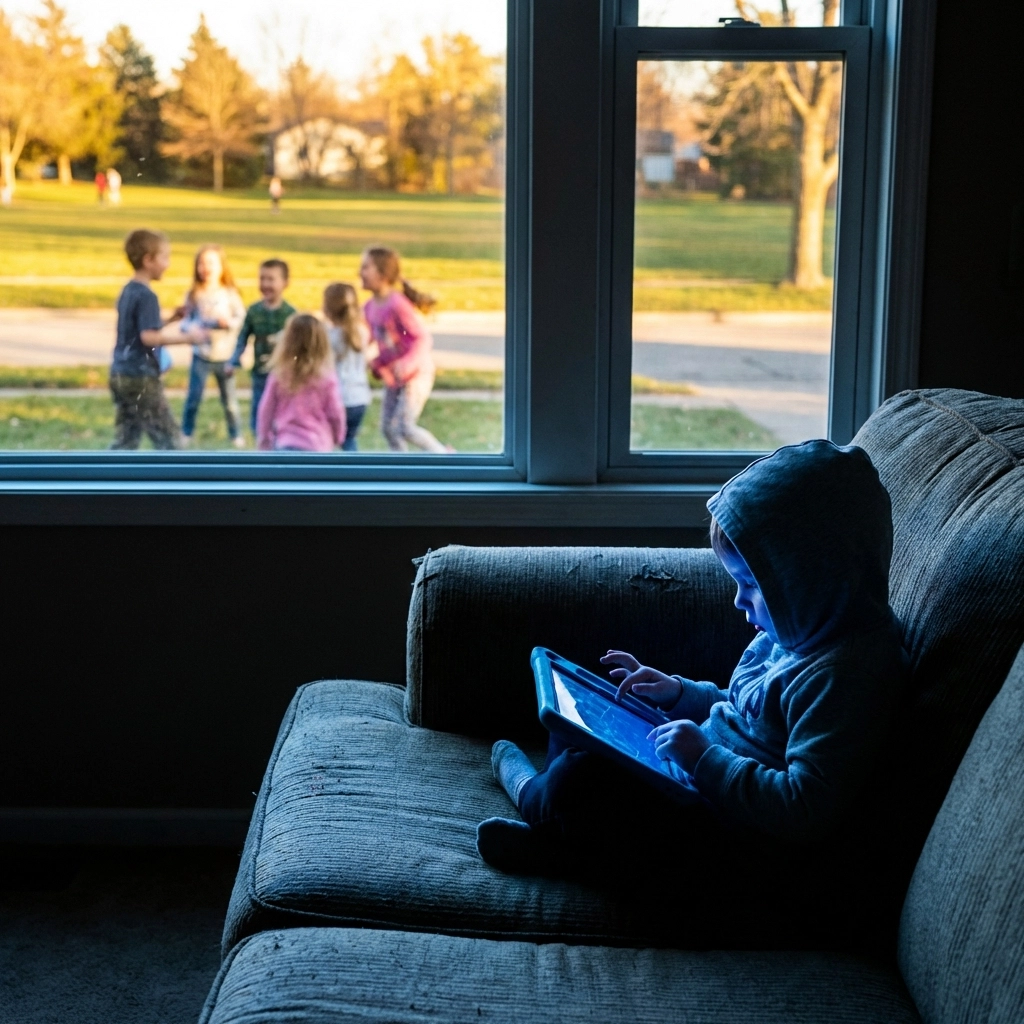
Why Mat Time Is the New Screen Time
When your child steps onto the martial arts mat, something shifts. The phone goes away. The distractions disappear. And for the next hour, they're fully present: physically, mentally, and socially engaged in ways that screens simply cannot replicate.
Here's what makes mat time so transformative:
1. Physical Engagement That Builds Real Strength
Martial arts training is a full-body workout disguised as fun. Your child isn't just sitting and tapping: they're kicking, punching, rolling, stretching, and building coordination with every class.
Unlike team sports where your child might stand in the outfield waiting for action, martial arts keeps everyone moving the entire time. The result is improved:
Cardiovascular health and endurance
Flexibility and balance
Core strength and muscle development
Motor skills and body awareness
And here's the best part: kids don't even realize they're exercising. They're too busy learning new techniques, earning stripes, and having a blast with their training partners.
2. Mental Focus That Translates to School and Life
If your child struggles to focus on homework or follow multi-step instructions, martial arts might be the unexpected solution. Every class requires students to listen carefully, watch demonstrations, and execute techniques in sequence.
This isn't passive learning. It's active engagement that strengthens the same neural pathways your child needs for academic success. Many parents report that after a few months of training, their kids show improved:
Attention span and listening skills
Memory retention and recall
Problem-solving abilities
Patience and self-regulation
Think of martial arts as a focus boot camp: but way more fun than it sounds.
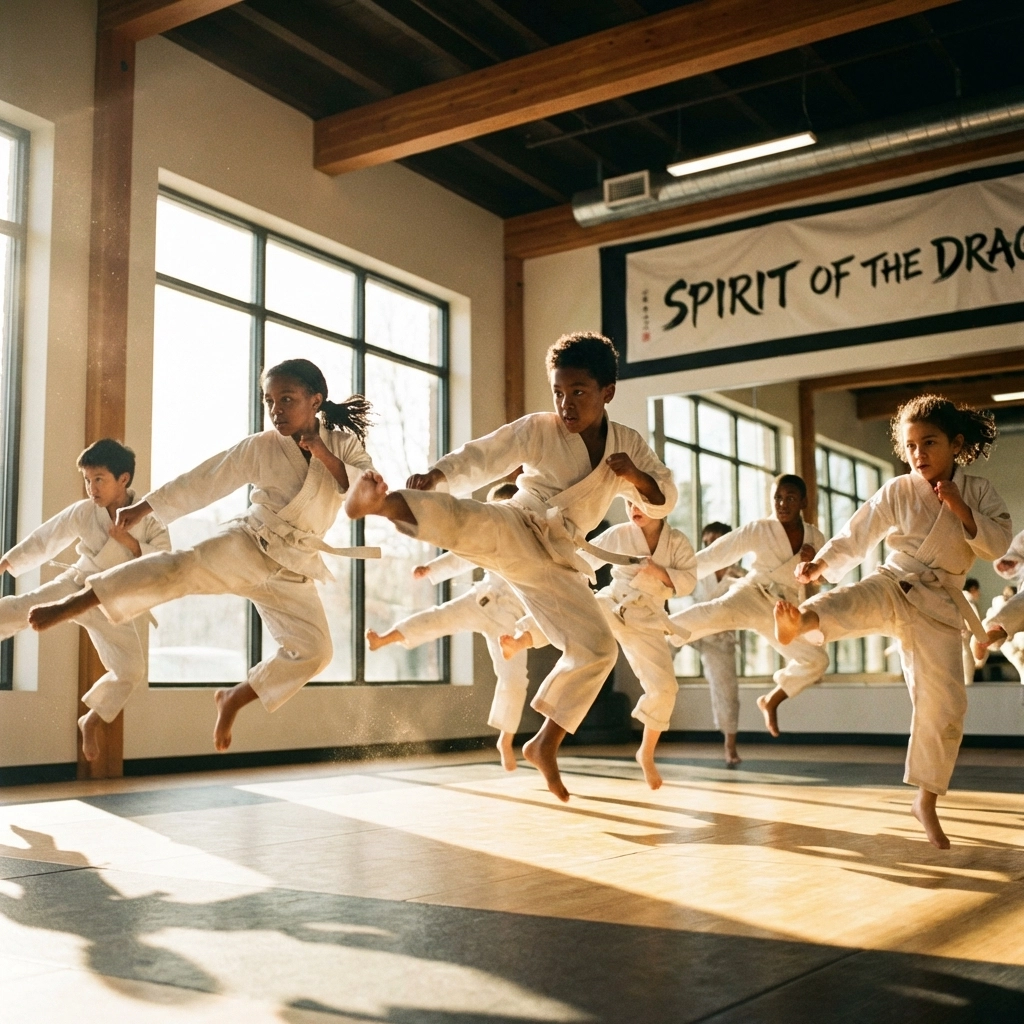
3. Emotional Resilience and Confidence
Here's something screens will never teach your child: how to handle setbacks, face challenges, and keep going when things get hard.
In martial arts, every student experiences moments of struggle. A technique doesn't click right away. A sparring match doesn't go as planned. A belt test feels intimidating. These experiences: when guided by supportive instructors: become powerful lessons in resilience.
Your child learns that:
Failure is part of learning, not the end of the road
Consistent effort leads to measurable improvement
They're capable of more than they thought possible
Challenges are opportunities to grow stronger
This kind of emotional intelligence and self-confidence? No app can download that.
4. Real Social Connection (Not the Digital Kind)
Social media promises connection but often delivers comparison, anxiety, and isolation. Martial arts offers something radically different: genuine community.
When your child trains alongside peers, they build friendships rooted in shared struggle and mutual respect. They learn to:
Communicate face-to-face with all ages
Support teammates and celebrate others' successes
Accept feedback gracefully
Work cooperatively toward common goals
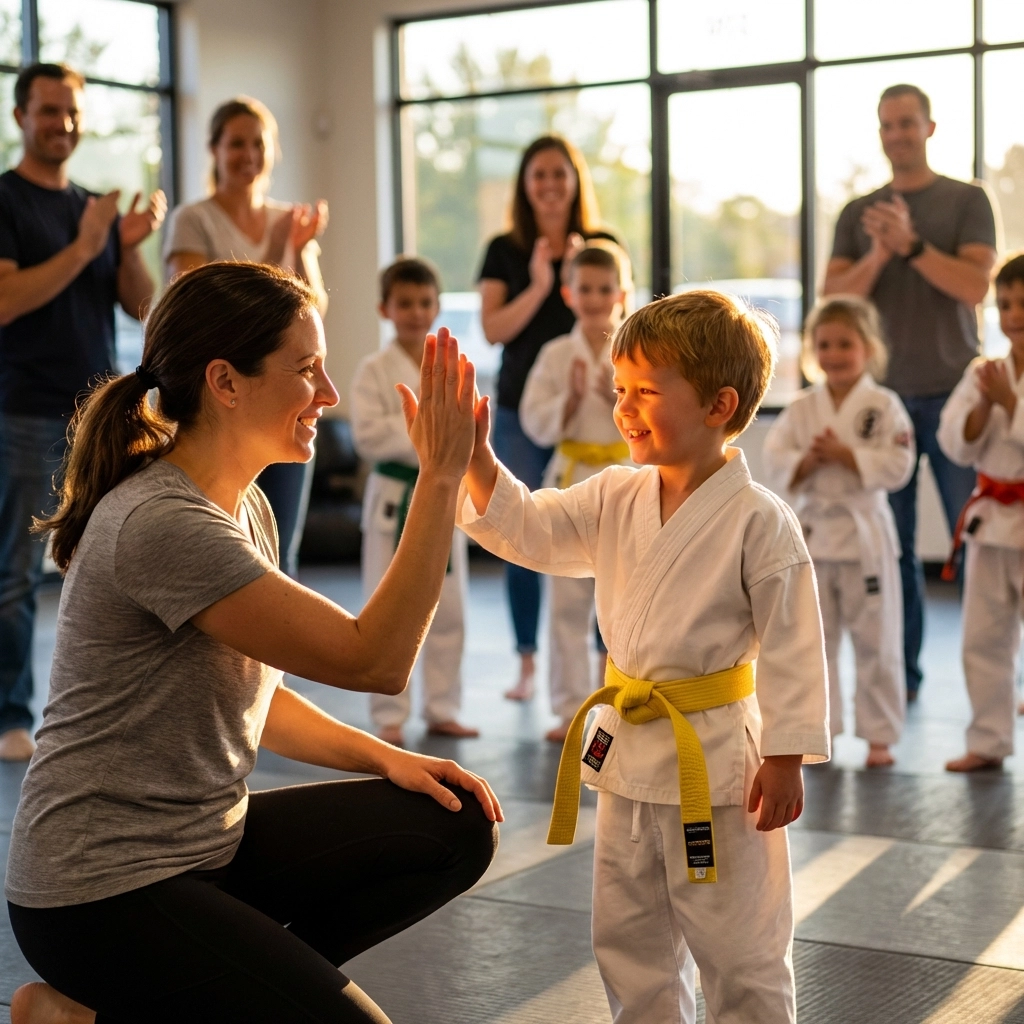
At West Coast World Martial Arts, our students become part of a family. They high-five each other after drills, encourage classmates through tough moments, and build bonds that extend far beyond the mat.
Making the Switch: Practical Tips for Your Family
Ready to trade some screen time for mat time? Here's how to make the transition smooth and sustainable:
Start Small and Build Gradually
You don't need to go cold turkey on screens. Instead, try replacing just one hour of daily screen time with martial arts class two or three times per week. Small changes lead to big results over time.
Let Your Child Choose Their Path
Martial arts comes in many flavors: from Brazilian Jiu Jitsu to traditional karate-style programs. Let your child try a class and see what resonates. When kids feel ownership over their choice, they're more likely to stick with it.
Create Screen-Free Zones and Times
Establish clear boundaries at home. Maybe screens stay off during dinner, or the hour before bed is reserved for reading or family time. When martial arts becomes part of this routine, it reinforces healthy habits across the board.
Celebrate the Wins
Every new technique learned, every stripe earned, every moment of courage on the mat: these are worth celebrating. Positive reinforcement helps your child associate martial arts with achievement and pride.
Programs for Every Age at West Coast World Martial Arts
Whether your child is 4 or 14, there's a program designed to meet them exactly where they are:
Lil' Dragons (Ages 4-6): Our youngest students learn foundational movement skills, basic techniques, and important life skills like listening and respect: all through age-appropriate games and activities.
Juniors (Ages 7-12): This program builds on fundamentals with more advanced techniques, self-defense training, and character development. Kids in this age group often show dramatic improvements in focus, confidence, and physical fitness.
Teen & Adult Program: Teenagers especially benefit from martial arts as a healthy outlet for stress and energy. Our teen program challenges students physically while building the mental toughness they need to navigate high school and beyond.
The Transformation You'll See
Here's what El Dorado Hills parents consistently tell us after their kids start training:
"My son actually wants to put down the video games now."
"Her teachers have noticed a huge improvement in focus."
"He walks taller and speaks up more: it's like a different kid."
"Our whole family is more active now because she inspired us."
These aren't miracles. They're the natural result of consistent, engaging, purposeful activity that challenges kids to grow.
Your Next Step
If you're tired of fighting the screen time battle and ready to try something different, we invite you to see what mat time can do for your family.
Visit West Coast World Martial Arts to learn more about our programs, meet our instructors, and schedule a trial class. Your child's transformation might be just one class away.
The screens will still be there when class is over. But the confidence, strength, and life skills your child builds on the mat? Those stay with them forever.
Comments