

The Science-Backed Parent's Guide to Martial Arts Self Defense: Why El Dorado Hills Families Are Ditching Misconceptions for Evidence-Based Training
As an El Dorado Hills parent, you've probably heard every martial arts myth in the book. "All fighting styles are basically the same." "Traditional arts are always better." "My child needs to learn flashy moves to defend themselves." Here's the truth: modern research has completely changed what we know about effective self-defense training, and forward-thinking families in our community are making smarter choices based on evidence, not outdated assumptions.
The Misconceptions That Keep Parents Stuck
Let's tackle the biggest myths head-on. Many parents believe that traditional martial arts with elaborate forms and ancient philosophies automatically translate to better self-defense skills. Others think that the martial art with the most intimidating reputation must be the most effective. Some assume that all fighting styles work equally well in real-world situations.
The reality? None of these assumptions hold up under scientific scrutiny. Research consistently shows that the effectiveness of martial arts for self-defense depends on specific training methodologies, not tradition, reputation, or complexity.
Your family deserves training based on what actually works, not what sounds impressive at dinner parties.
What the Science Actually Says About Self-Defense Training
Evidence-based analysis reveals that Brazilian Jiu-Jitsu (BJJ) stands out as the most effective martial art for real-world self-defense. This isn't opinion: it's backed by measurable outcomes in controlled environments and real-world applications.
Here's why BJJ consistently outperforms other martial arts in effectiveness studies:
Full-Resistance Training from Day One
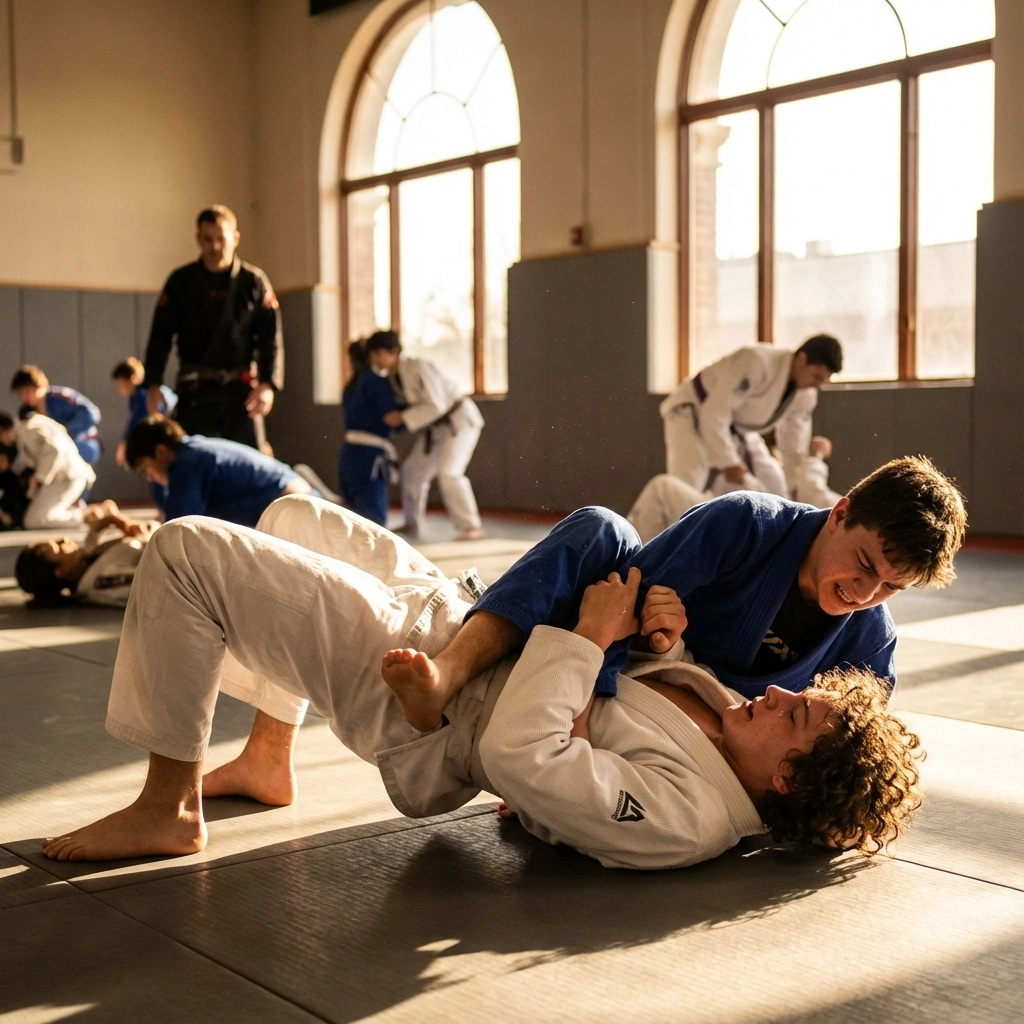
Unlike traditional martial arts that rely on compliant drilling partners, BJJ emphasizes live sparring against actively resisting opponents from the beginning. This means your child learns to apply techniques under pressure, developing skills that transfer directly to real situations.
When your teenager practices a BJJ escape, they're doing it against someone who's genuinely trying to prevent the escape. This creates muscle memory and problem-solving abilities that static drills simply cannot match.
Control Without Excessive Force
BJJ teaches your child to neutralize threats while maintaining control without striking. This approach proves especially valuable in today's world where confrontations often happen in front of witnesses or cameras. Your child learns to de-escalate situations effectively while protecting themselves.
This controlled approach also reduces legal complications that can arise from striking-based self-defense, making it a safer choice for young people navigating complex social environments.
Size and Strength Independence
Research consistently shows that BJJ relies on technique and leverage rather than raw physical attributes. This means smaller or weaker individuals: including many teenagers: can effectively defend themselves against larger attackers.
Your child doesn't need to be the biggest or strongest person in the room to protect themselves when they understand proper body mechanics and positioning.
Other Evidence-Based Options for Your Family
While BJJ leads in effectiveness research, other martial arts offer valuable self-defense benefits when taught with proper methodologies:
Muay Thai: The Science of Striking
Studies identify Muay Thai as the most effective striking art for self-defense applications. With eight points of contact: fists, elbows, knees, and shins: plus clinch work, Muay Thai provides comprehensive striking tools.
The push kick technique, in particular, proves invaluable for creating distance and allowing escape, which aligns perfectly with the primary goal of self-defense: getting away safely.
Judo: Powerful Throws and Control
Judo offers legitimate self-defense capabilities through powerful throwing techniques. Modern competition rule changes have reduced some practical applications, but the fundamental principles of off-balancing and controlling opponents remain highly effective.
Boxing: Footwork and Movement Mastery
Boxing develops excellent footwork, head movement, and hand-eye coordination. While limited in ground fighting and close-range scenarios, boxing provides solid foundational skills for distance management and striking accuracy.
The Combination Advantage: Why El Dorado Hills Families Choose Hybrid Training
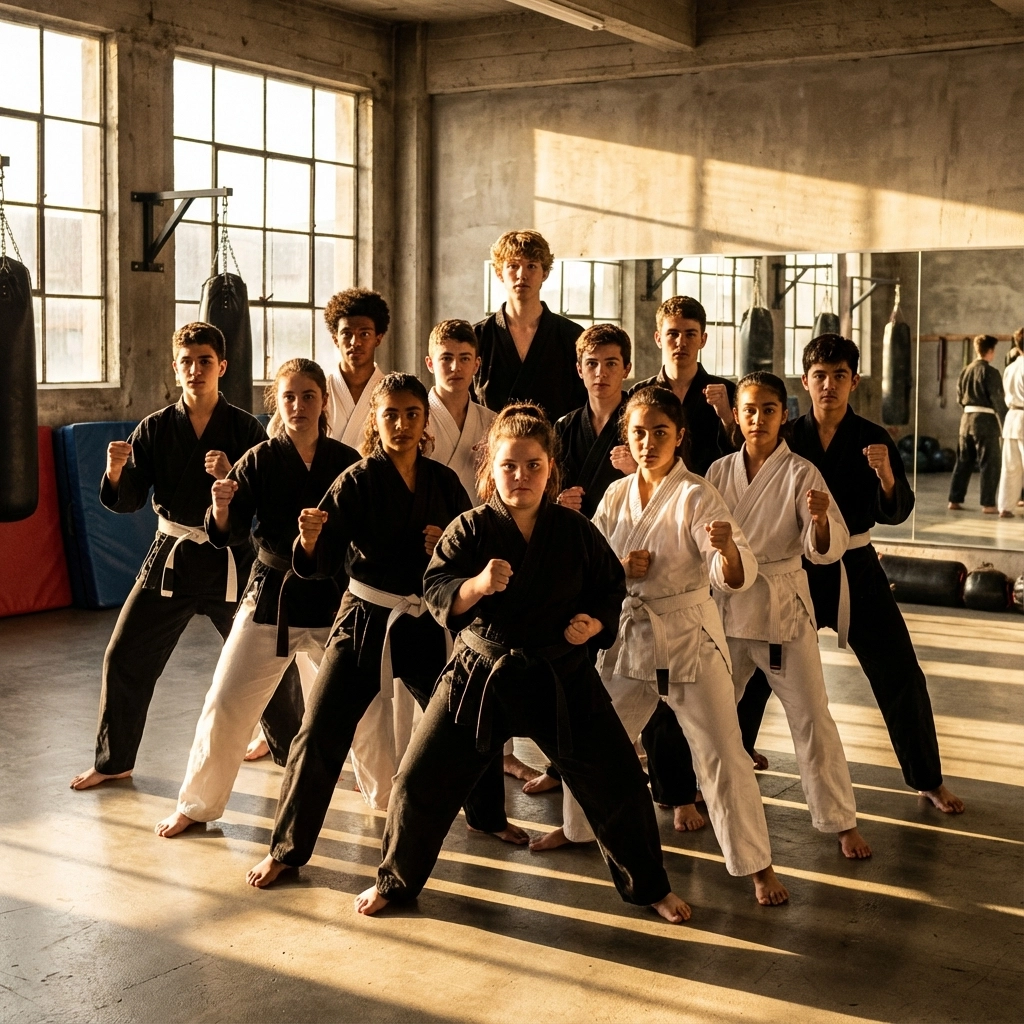
Forward-thinking parents in our community understand that combining techniques from multiple martial arts provides comprehensive self-defense preparation. Modern MMA-influenced training that blends grappling and striking skills prepares your child for various scenarios they might encounter.
This hybrid approach doesn't mean learning everything superficially. Instead, it means developing a strong foundation in one primary art (typically BJJ for its proven effectiveness) while incorporating complementary skills from other disciplines.
Practical Steps for El Dorado Hills Parents
Ready to make an evidence-based choice for your family's martial arts training? Follow this systematic approach:
Evaluate Training Methodologies
Visit potential schools and observe classes. Look for programs that emphasize live sparring and resistance training rather than just forms or compliant drills. Ask instructors about their approach to pressure testing techniques.
Quality programs will encourage questions about their training methods and be transparent about their effectiveness philosophies.
Prioritize Realistic Applications
Choose schools that focus on practical self-defense scenarios rather than tournament competition or traditional ceremonies. While these elements can add value, they shouldn't overshadow real-world application training.
Your child's safety depends on skills that work under stress, not techniques that only function in controlled environments.
Consider Your Child's Specific Needs
Every child brings different physical attributes, learning styles, and goals to martial arts training. Evidence-based training means matching the program to your child's individual requirements rather than forcing them into a one-size-fits-all approach.
Discuss your child's personality, physical development, and specific concerns with potential instructors to ensure proper program alignment.
Building Confidence Through Proven Methods
El Dorado Hills families increasingly recognize that true confidence comes from competence in proven techniques, not false assurance from untested methods. When your child trains in evidence-based martial arts, they develop genuine self-assurance backed by measurable skill development.
This confidence extends beyond physical confrontations into all areas of life. Children who master pressure-tested techniques approach challenges with greater resilience and problem-solving abilities.
Making the Smart Choice for Your Family
The martial arts landscape has evolved dramatically as research reveals what actually works for self-defense. El Dorado Hills families who prioritize evidence over tradition give their children significant advantages in safety, confidence, and personal development.
Your decision about martial arts training shouldn't be based on marketing claims or historical prestige. It should reflect current understanding of what prepares young people for real-world challenges while building character and confidence.
Evidence-based training doesn't mean abandoning all traditional values: it means ensuring that those values are supported by methods that actually achieve their intended goals. When you choose martial arts training grounded in scientific evidence, you invest in your child's genuine capability, not just the appearance of training.
Ready to explore evidence-based martial arts training for your family? Contact us to discuss how our programs combine proven effectiveness with the character development that El Dorado Hills families value. Your child's safety and confidence deserve nothing less than training that actually works.
Comments